What Is a Barbed Wire Making Machine?
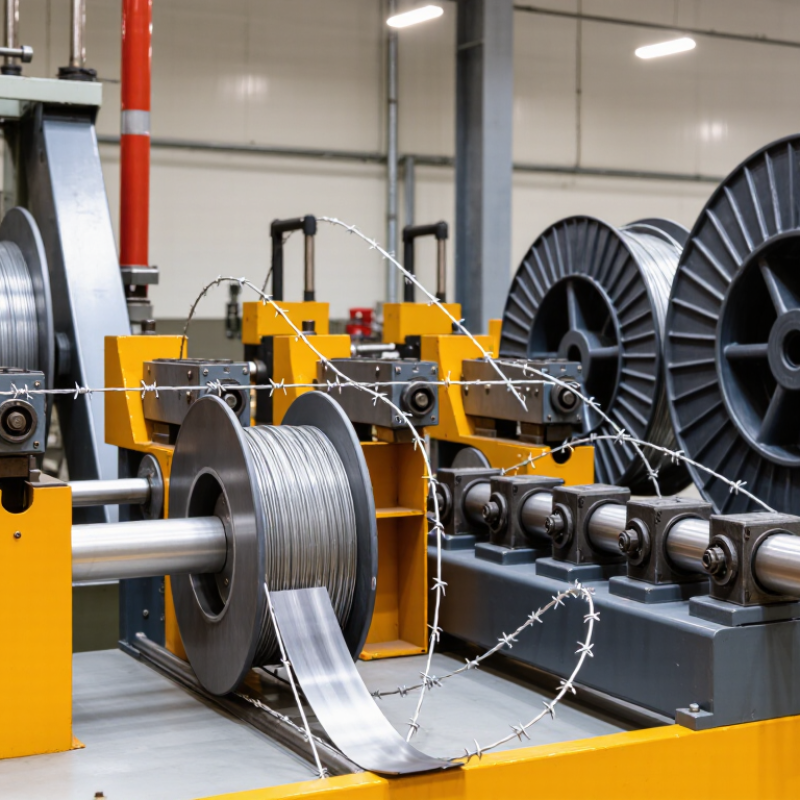
A Barbed Wire Making Machine is an industrial system designed to twist line wires and attach sharp wire barbs at controlled intervals. It supports the production of fencing materials for farms, property boundaries, transport facilities, and other lawful security applications. The machine commonly includes wire pay-off stands, straightening units, twisting mechanisms, barb-forming tools, cutting devices, and a take-up section.
Its operation appears simple, but consistent results require careful adjustment. Wire diameter, tensile strength, barb spacing, and twisting speed must match the intended specification. A small alignment error can create uneven barbs, loose twists, or damaged wire. Operators should inspect coils, measure spacing, and monitor tension throughout production. Practical experience matters here. A manual may explain settings, but real wire behaves differently under changing humidity, temperature, and material quality.
A reliable Barbed Wire Making Machine should also support safe operation and maintainable production. Guards, emergency stops, clear operating procedures, and suitable personal protective equipment are essential. Regular lubrication and inspection can reduce unexpected downtime. Quality records help verify each batch and identify recurring faults. The machine is not a magic box. Its performance depends on design, materials, calibration, and trained supervision. Some manufacturers emphasize output speed too heavily, while neglecting maintenance access or operator safety. That deserves careful review before purchase. Understanding these details helps buyers compare machines responsibly and select equipment suited to their lawful fencing requirements.
Barbed Wire Making Machine: Definition, Function, and Industrial Scope
What Is a Barbed Wire Making Machine?
Barbed Wire Making Machine: Definition, Function, and Industrial Scope
A barbed wire making machine is industrial equipment that combines steel wires into a continuous security and boundary product. It twists line wires around evenly spaced barbs. The machine controls wire feeding, twisting speed, barb distance, and finished coil length.
Modern equipment usually includes a frame, wire straighteners, rotating twisting units, barb-forming tools, and a cutting system. Operators load suitable wire, set production parameters, and monitor tension during operation. Consistent tension matters. Loose wires can create uneven spacing, while excessive tension may cause breaks. Practical experience shows that clean wire and regular lubrication improve stability.
The machine serves farms, infrastructure projects, property boundaries, and industrial facilities. Large production lines support long working hours and repeatable output. Smaller systems may suit workshops with changing order sizes. Manufacturers and buyers should examine capacity, wire diameter, energy use, maintenance access, and operator protection. A machine that looks fast may still perform poorly under continuous load. That point is easy to miss.
Quality checks should include barb spacing, twist tightness, coil weight, and surface condition. Operators should also inspect guards, emergency controls, and moving parts before production. Automation reduces repetitive work, but it does not remove the need for trained supervision. Wire quality can vary between batches, so settings may require adjustment. In real workshops, perfect consistency is difficult. Careful records help identify why.
Raw Materials and Wire Specifications: 1.6–3.0 mm Galvanized Steel Wire
What Is a Barbed Wire Making Machine?
Raw Materials and Wire Specifications: 1.6–3.0 mm Galvanized Steel Wire
A barbed wire making machine twists line wires and fixes barbs at controlled intervals. Its performance depends heavily on the incoming galvanized steel wire. Many production lines use wire between 1.6 and 3.0 mm in diameter. The wire usually arrives in large coils. Its zinc coating helps reduce corrosion during outdoor exposure. Diameter is not a cosmetic detail. It affects feeding tension, twisting force, and finished wire strength.
Thinner wire requires careful tension control. It may break when the machine accelerates too quickly. Thicker wire needs stronger forming pressure and more stable cutters. Operators should measure diameter with a calibrated micrometer before production. They should also inspect the surface for rust, scratches, oil, or uneven zinc coverage. I have seen apparently clean coils produce unstable barbs because their diameter changed along the coil. That mistake is easy to miss.
Machine settings must match the selected wire. Feed speed, twisting distance, barb spacing, and cutting pressure all need adjustment. A 2.5 mm wire cannot always use settings designed for 1.8 mm wire. Record the actual diameter and coil condition. This simple record improves repeatability. However, no setup remains perfect forever. Humidity, tool wear, and small material differences can still change the result. Regular checks are necessary.
Core Machine Components: Twisting Units, Barb Formers, and Drive Systems
What Is a Barbed Wire Making Machine?
A barbed wire making machine forms wire into a continuous fence material. Its core components control strength, spacing, and production stability. The twisting units guide two line wires and lock them into a consistent spiral. They must maintain steady tension. Uneven tension can create loose sections or distorted wire.
Barb formers shape short wire pieces around the line wires at fixed intervals. Their cutting blades, forming dies, and guides require accurate alignment. A small adjustment can change barb sharpness and spacing. The drive system connects motors, gears, shafts, and speed controls. It synchronizes twisting, feeding, cutting, and take-up operations. During machine inspections, operators often find that vibration affects alignment before major damage appears. No setup is perfect. Regular checks remain necessary.
Tips: Check wire tension before production begins. Inspect forming dies for wear and burrs. Keep moving parts clean and properly lubricated. Measure barb spacing during the first roll. If the wire looks uneven, stop and investigate early. A slower setting may produce better consistency than maximum speed.
What Is a Barbed Wire Making Machine?
A barbed wire making machine combines twisting units, barb formers, and drive systems to produce evenly spaced barbs on twisted steel strands. The chart shows common barb-spacing settings used in general production.
Twisting units keep the line wires aligned, barb formers shape and wrap the barb wires, and the drive system synchronizes wire feeding, twisting, and take-up. A smaller spacing creates more barbs per metre, while a larger spacing supports faster material throughput.
Step-by-Step Production Process: Feeding, Twisting, Barb Forming, and Winding
What Is a Barbed Wire Making Machine?
A barbed wire making machine converts steel wire into a continuous security fence product. Its operation depends on controlled feeding, accurate twisting, barb forming, and steady winding. The raw wire usually enters through straightening rollers and tension guides. These parts remove bends and maintain consistent pull.
World Steel Association reported approximately 1.89 billion tonnes of crude steel production in 2023. That scale highlights the importance of stable wire-processing equipment.
The twisting unit combines two line wires around a central path. Another mechanism feeds shorter barb wires at measured intervals. Rotating cutters then shape and clamp each barb around the line wires.
Small errors matter.
Operators should check wire diameter, tension, twist density, and barb distance during production. ASTM A121 provides recognized requirements for zinc-coated steel barbed wire, including construction and coating considerations. These requirements support practical quality checks, but machine settings still need adjustment for different wire grades.
The finished wire passes through a guiding system before winding onto a coil. The winding speed must match the forming speed. Otherwise, overlapping layers may deform the product.
A 2024 market outlook from Mordor Intelligence estimated continued growth in global barbed wire demand, yet production volume alone should not define performance.
In my view, maintenance records and sample testing reveal more than speed figures. The assumption that faster always means better deserves testing.
Industrial Performance Standards: 40–120 m/min Output and Quality Control
What Is a Barbed Wire Making Machine?
Industrial Performance Standards: 40–120 m/min Output and Quality Control
A barbed wire making machine twists line wires and fixes barbs at controlled intervals. Industrial models commonly operate between 40 and 120 m/min. Actual output depends on wire diameter, barb spacing, material hardness, and coil tension. A higher speed is not always better. Running at 120 m/min can increase vibration, wire breaks, and spacing errors. In practice, a stable 70 m/min may deliver more usable product than an unstable high-speed setting.
Quality control begins during production. Sensors can monitor wire tension, rotation speed, and barb placement. Operators should inspect the first coil, then repeat checks at planned intervals. Measurements normally include wire diameter, barb distance, barb sharpness, tensile strength, and protective coating thickness. Calibrated gauges improve reliability. Simple visual checks still matter.
Small defects can expose larger process problems. Uneven barbs may indicate worn forming tools or poor alignment. Loose coils can result from incorrect take-up tension. Maintenance records should include tool changes, lubrication, sensor calibration, and rejected lengths. Safety guards and emergency stops also require regular testing. Speed targets sometimes look impressive on paper, but field conditions are less predictable. Humidity, raw material variation, and operator adjustments can change results. That part deserves honest review.