China Top 10 High Alumina Castable Suppliers
China’s Top 10 High Alumina Castable Suppliers: An Expert-Led Introduction
High Alumina Castable is a critical monolithic refractory for furnaces, kilns, boilers, ladles, and heat-treatment equipment. Its performance depends on alumina content, cement quality, particle grading, installation control, and drying discipline. A stronger product is not always the correct product. Service temperature, chemical exposure, abrasion, thermal cycling, and repair conditions must guide the selection.
Refractory engineer Dr. R. E. Moore once stated, “Refractory performance begins with understanding the operating environment, not simply choosing the highest specification.” This practical view remains important when comparing Chinese suppliers. A castable may show impressive laboratory strength, yet fail after poor mixing or rushed dry-out. Small details matter. Water addition, vibration, curing time, and burner control can change the result.
This guide examines China’s Top 10 High Alumina Castable Suppliers through technical capability, manufacturing experience, product consistency, customization, export reliability, and after-sales support. It considers measurable details, including alumina grades, bulk density, cold crushing strength, permanent linear change, and recommended installation methods. The comparison is useful, but not perfect. Supplier data can vary between batches, projects, and testing standards. Buyers should request recent test reports, reference projects, and clear application guidance before making a final decision. A supplier’s catalog may look polished. The jobsite tells the harder truth.
What Is High Alumina Castable and Why Is It Used?
What Is High Alumina Castable and Why Is It Used?
High alumina castable is a monolithic refractory made from alumina-rich aggregates, fine powders, and a bonding system. Its alumina content commonly exceeds 45%, although specialized grades contain much more. Unlike shaped bricks, it arrives as a dry mix and forms a lining after adding water, placing, curing, and controlled drying. The material can fill complex furnace areas with fewer joints.
Its main value is resistance. High alumina castable withstands intense heat, abrasive movement, and many molten slags. It is used in steel furnaces, cement kilns, heat-treatment equipment, and waste-processing chambers. A dense grade can protect a floor from impact. A low-cement grade may offer better strength and lower porosity when installation is carefully controlled. It performs well, but it is not a universal solution.
In practical site inspections, excess mixing water remains a common problem. It makes placement easier, yet often weakens the cured lining. Poor drying can also trap steam and cause explosive spalling. This detail is easy to underestimate. Buyers should review alumina content, bulk density, crushing strength, thermal shock data, and application temperature. Reliable suppliers should provide batch traceability and clear curing instructions. Test results matter, but field conditions matter more. A castable selected only from a catalog may fail when vibration, moisture, or heating schedules differ.
What Is High Alumina Castable and Why Is It Used?
High alumina castable is a monolithic refractory concrete containing more than 45% Al2O3. It is used for furnace linings, kiln floors, boilers, ladles, and other high-temperature areas because it offers good refractoriness, abrasion resistance, thermal-shock resistance, and chemical stability.
The chart presents representative industry ranges by alumina grade. Actual service temperature depends on cement content, aggregate selection, installation quality, atmosphere, load, and operating conditions.
Key Criteria for Selecting High Alumina Castable Suppliers
China Top 10 High Alumina Castable Suppliers
Key Criteria for Selecting High Alumina Castable Suppliers
China’s refractory market serves demanding steel, cement, and nonferrous plants. The World Steel Association reported 1.89 billion tonnes of crude steel production in 2023. That scale makes supplier consistency more important than a low quotation. USGS Mineral Commodity Summaries 2024 recorded global bauxite mine production near 390 million tonnes in 2023. Raw material availability is broad, but quality still varies between deposits and batches.
Check Al2O3, CaO, SiO2, Fe2O3, bulk density, porosity, and particle grading. Ask for recent laboratory reports, not promotional tables. ASTM C133 can verify cold crushing strength, while ASTM C704 measures abrasion resistance. ISO 1927-1 also helps define castable classification and testing language. Small details matter. Confirm mixing water, curing temperature, firing schedule, and test age. A strong sample can fail after poor installation.
Reliable suppliers should provide batch traceability, technical data sheets, safety documentation, and site guidance. Experience matters when castables face vibration, thermal shock, or rapid dry-out. Request references from comparable operating conditions, not only laboratory results. I would question any supplier promising zero variation. Even reputable factories can show differences between production lots. Independent testing is worth the cost, especially for steel ladles, kiln linings, and high-wear zones. Delivery capacity, packaging quality, export experience, and corrective-action procedures also deserve review before signing a contract.
China’s Top 10 High Alumina Castable Suppliers
China’s Top 10 High Alumina Castable Suppliers are often compared by material quality, production control, and technical support. A dependable supplier should provide clear alumina content, bulk density, crushing strength, and permanent linear change data. These figures matter when castables face furnace heat, abrasion, and chemical attack. A serious manufacturer also explains raw material sources, particle grading, and cement content without hiding behind vague claims.
Site experience reveals more than a catalogue. During installation, workers may need a castable with steady flow, low rebound, and predictable setting time. Suppliers should offer mixing guidance, curing temperatures, drying schedules, and repair advice. Trial samples are useful. Small batches can expose segregation, excessive dust, or difficult vibration before a full order reaches the jobsite. Packaging also deserves attention, especially in humid coastal storage conditions.
The top ten should not be treated as a permanent ranking. Project results depend on furnace design, lining thickness, water control, and installation skill. A supplier may deliver excellent laboratory data yet perform poorly when field support is weak. I have seen specifications look impressive but leave curing details unclear. That gap deserves questioning. Buyers should request recent test reports, batch traceability, production photos, and references from comparable thermal applications. Real reliability is built through evidence, not polished wording.
China Top 10 High Alumina Castable Suppliers - China’s Top 10 High Alumina Castable Suppliers
Anonymized technical benchmark based on commonly published commercial specifications for high alumina castables. Actual values vary by formulation, production batch, and application. | Supplier Profile | Typical Al₂O₃ Content | Product Type | Typical CaO Content | Working Temperature | Typical Application | Quality Documentation | Common Supply Form |
| Profile 01 | 70–75% | Conventional dense castable | ≤10% | 1,400–1,500°C | General furnace linings and kiln floors | Certificate of analysis; batch test report | 25 kg bags; bulk bags |
| Profile 02 | 75–80% | Low-cement castable | 4–8% | 1,500–1,600°C | Heating zones and high-wear furnace sections | Technical data sheet; installation guide | Moisture-resistant bags |
| Profile 03 | 80–85% | Low-cement dense castable | 3–6% | 1,550–1,650°C | Cement, lime, and non-ferrous processing equipment | Batch traceability; cold crushing strength data | 25 kg bags; palletized loads |
| Profile 04 | 85–90% | Ultra-low-cement castable | ≤3% | 1,600–1,700°C | Steel ladles, tundish linings, and burner zones | Chemical analysis; permanent linear change test | Sealed moisture-barrier bags |
| Profile 05 | 70–80% | Medium-cement abrasion-resistant castable | 5–10% | 1,400–1,550°C | Cyclone outlets, chutes, and material-transfer zones | Abrasion resistance; bulk density data | 25 kg bags; big bags |
| Profile 06 | 80–85% | Fast-drying castable | 3–7% | 1,500–1,650°C | Maintenance repairs and short shutdown projects | Dry-out schedule; explosive-spalling guidance | Lined paper bags; palletized bags |
| Profile 07 | 75–85% | Pumpable castable | 4–8% | 1,450–1,600°C | Complex shapes and mechanically installed linings | Flowability data; mixing and pumping instructions | 25 kg bags; bulk delivery |
| Profile 08 | 85–90% | High-strength castable | ≤4% | 1,600–1,750°C | Steel reheating furnaces and high-load hearth areas | Cold crushing strength; modulus of rupture data | Moisture-proof export packaging |
| Profile 09 | 70–80% | Thermal-shock-resistant castable | 5–9% | 1,400–1,550°C | Intermittent-operation kilns and transfer sections | Thermal-shock assessment; reheating data | 25 kg bags; customized pallet loads |
| Profile 10 | 90%+ | Premium ultra-high-alumina castable | ≤2% | 1,650–1,800°C | Extreme-temperature zones and specialty furnaces | Full inspection report; third-party testing available | Sealed bags; containerized export shipments |
Product Range, Manufacturing Strength, and Quality Standards
China’s top high alumina castable suppliers are often judged by product range, manufacturing strength, and quality standards. A dependable supplier should offer castables for different temperatures, installation methods, and furnace zones. Common grades may include medium, high, and ultra-high alumina formulations. Each grade should show alumina content, bulk density, working temperature, and recommended water addition.
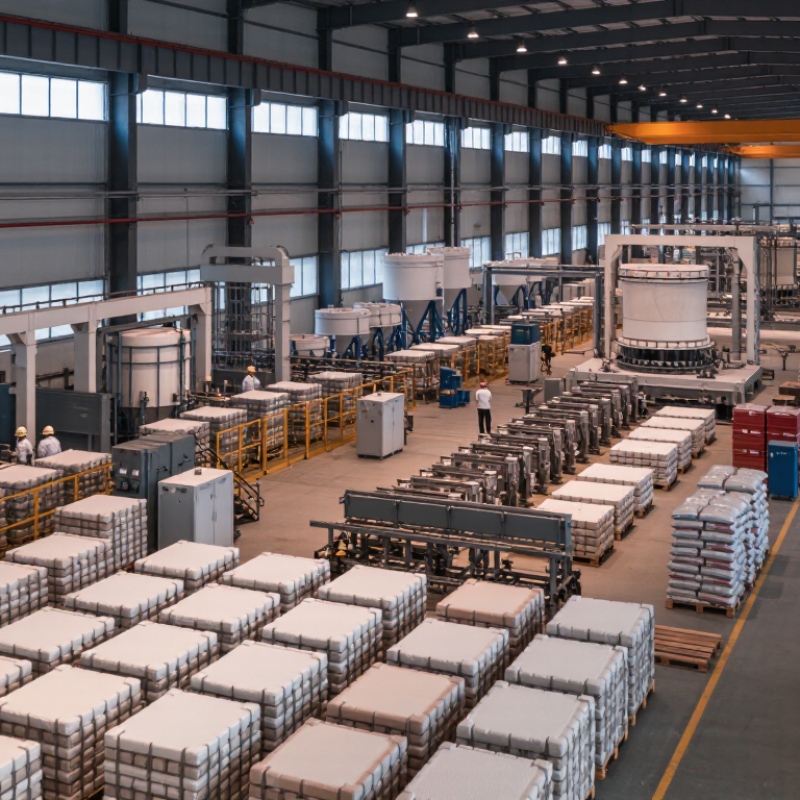
Manufacturing strength is visible in more than factory size. Look for controlled raw material storage, automated mixing, laboratory testing, and batch traceability. Experienced producers normally test flowability, cold crushing strength, permanent linear change, and thermal shock resistance. They should also provide technical data that matches actual production batches. Some suppliers present impressive figures, but field performance can vary. Request samples and review installation records before making a large purchase.
Tips: Ask for recent test reports, not old brochures. Confirm whether testing follows recognized methods such as ISO or ASTM procedures. Check packaging quality, moisture protection, delivery consistency, and technical support. A strong supplier can explain curing schedules and drying risks clearly. Still, no castable suits every furnace. The selected grade should reflect operating temperature, abrasion, chemical exposure, and repair conditions. Mistakes happen when buyers compare alumina percentage alone.