Choosing the right Magnet Zippers can influence product usability, appearance, durability, and customer satisfaction. A smooth magnetic closure may make a handbag feel premium, while weak alignment can create daily frustration. The best choice depends on more than attractive packaging. Product weight, fabric thickness, opening frequency, washing conditions, and target users all matter. A zipper designed for a lightweight pouch may fail on a filled travel bag. Small details become visible quickly.
In practical product evaluations, I examine magnetic strength, pull-tab design, tape flexibility, tooth alignment, and stitching support. I also check whether the magnets stay centered after repeated opening and closing. Test samples should face realistic conditions, including bending, friction, moisture, and storage pressure. Not every supplier measures performance in the same way. Ask for material details, size tolerances, test records, and production samples before placing a large order. Do not trust appearance alone.
Fit matters most.
For fashion products, color matching and quiet operation may lead the decision. Outdoor products require stronger construction and better resistance to moisture and dirt. Children’s items need careful design review, secure attachment, and clear usage guidance. Requirements can differ greatly between markets and product categories, so technical recommendations should be verified with qualified professionals.
I have seen attractive zippers chosen too quickly, only to reveal stiff movement during final assembly. That mistake is avoidable, but no selection method is flawless. This guide compares important performance factors, supplier questions, and testing steps. It aims to help designers and buyers make informed decisions while leaving room for product-specific judgment.
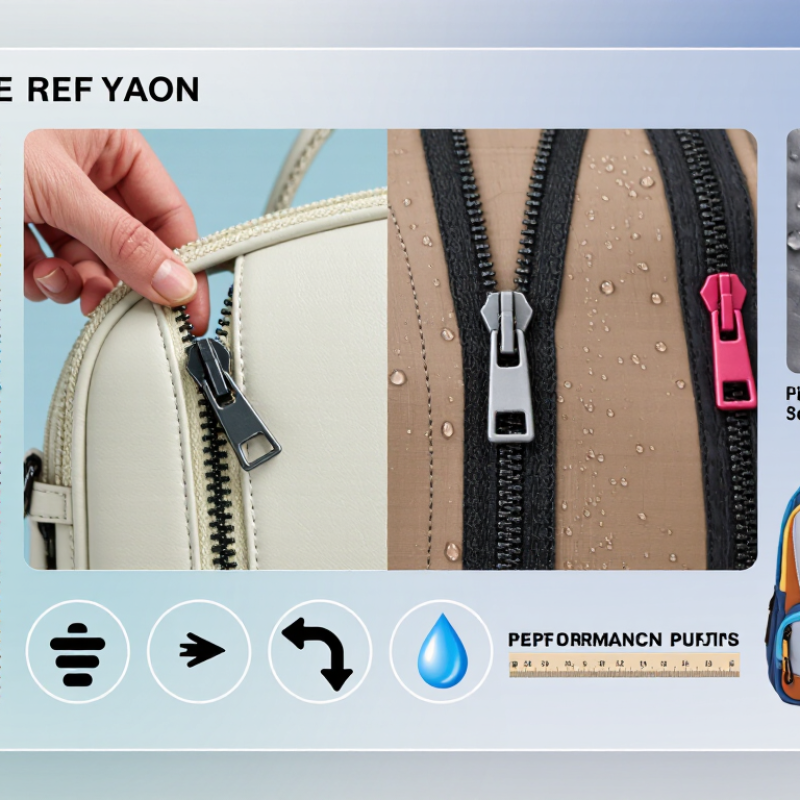
Magnet zippers use magnetic components along two flexible edges to help them meet and stay closed. Depending on the design, magnets may sit inside the zipper tape or near its interlocking elements. When the edges approach, magnetic attraction guides them into alignment. A light press can then secure the closure. No fumbling with a small pull tab. That can be useful on bags, pouches, or garments opened often.
The magnets do not replace every part of the fastening system in the same way. Some designs rely mainly on magnetic force, while others combine magnets with teeth or a mechanical track. The difference affects how the closure feels and how much force it takes to open. For example, a sample pouch should close smoothly when its edges meet, but it should not spring open when lightly handled. Test it with the actual fabric and lining; materials can change how well the edges align.
Magnetic closures can collect fine metal particles, and repeated bending may affect the surrounding tape. They may also be unsuitable near equipment sensitive to magnets, so check the product’s intended use. Small details matter. Ask suppliers about magnet placement, pull strength, and care instructions, then test samples after repeated opening and washing. Results may vary, and that is worth admitting before choosing a design.

How to Choose the Best Magnet Zippers for Your Products?
Which Magnet Zipper Types Suit Different Product Designs?
Magnetic zippers should match the product’s structure, opening frequency, and user needs. Standard magnetic zippers suit handbags, wallets, and lightweight pouches. Their sliders connect quickly and reduce the need for precise pulling. Concealed magnetic zippers work better for cushions, fashion garments, and clean-front accessories. They hide the teeth and protect the visual design. The compromise is real. Concealed systems can be harder to repair.
For jackets, travel gear, and medical-access clothing, separating magnetic zippers offer faster one-handed opening. A 2022 World Health Organization report estimates that 1.3 billion people experience significant disability worldwide. Easy-open closures can therefore support more inclusive product design. However, designers should test magnetic force with gloves, wet fingers, and repeated use. A strong magnet is not always better. It may pinch fabric or create uncomfortable resistance.
Water-resistant magnetic zippers suit outdoor bags and protective equipment with coated tapes and sealed construction. They require corrosion testing, wash testing, and alignment checks. Textile Exchange’s Materials Market Report 2024 reported 124 million tonnes of global fiber production in 2023. That scale makes durability an important design decision, not a minor detail. Longer zipper life can reduce replacement waste, although the full product impact needs careful measurement. A common mistake is selecting the closure from a sample photo alone. Test the finished product. Small misalignment can become a daily failure.
Which magnet zipper types suit different product designs?
The design-fit score uses a 1–5 practical rating based on alignment convenience, opening speed, flexibility, weather protection, and suitability for the listed product category. Higher scores indicate a better overall match, not a laboratory performance measurement.
How to Choose the Best Magnet Zippers for Your Products?
How to Evaluate Magnet Strength, Durability, and Safety?
Magnet strength should suit the product, not simply feel impressive. Measure the force needed to separate the closed zipper, then repeat with fabric layers matching the finished item. A small pull gauge gives more useful data than a hand test. Record results across samples; magnet placement and seam thickness can change performance. ASTM D2061 provides standardized methods for testing zipper strength, while ASTM D2062 addresses ease of operation. These methods offer a more repeatable basis for comparison than supplier claims alone.
Durability needs testing after repeated opening, washing, and exposure to expected conditions. Set a cycle target based on real use, and log separation force before and after testing. Inspect for loose magnets, cracked coatings, frayed tape, and closures that start to drift. The number of cycles matters. So does how the test was performed. A rough in-house test may reveal problems, but it is not a substitute for controlled laboratory testing.
Safety checks should consider small parts and foreseeable misuse, especially in products used by children. Confirm that magnets remain securely enclosed after wear and laundering, and assess whether damaged seams could expose them. Document material specifications, test conditions, sample counts, and failures. This detail can feel tedious. It prevents misleading “strong” or “durable” claims and helps teams compare production batches reliably.
| Evaluation Dimension | What to Check | How to Evaluate | Practical Selection Guidance |
|---|---|---|---|
| Magnetic holding strength | Whether the closed zipper stays shut under the product’s expected load, movement, and handling. | Test the assembled zipper on the finished product. Record the force needed to separate the closure using a suitable force gauge, and repeat at several points along the closure. | Choose a closure that remains secure in realistic use but can still be opened comfortably. Compare samples using the same fixture, pull direction, and test speed; there is no single force value suitable for every product. |
| Opening and closing effort | Ease of operation for the intended user, including users with limited hand strength or dexterity. | Have representative users open and close the product repeatedly. Note snagging, alignment difficulty, accidental opening, and whether the magnets guide the edges together. | Balance easy alignment with adequate retention. For bags or garments, test with the product both empty and carrying its typical contents. |
| Cycle durability | Wear, loosening, cracking, magnet movement, and loss of closure performance over repeated use. | Run repeated open-and-close cycles on production-representative samples. Recheck holding performance and inspect stitching, tape, teeth, end stops, and magnet encapsulation. | Set the cycle count and pass criteria from the product’s expected service life and use conditions. A cycle result is meaningful only when the test method and sample construction are recorded. |
| Attachment and seam strength | Whether the zipper tape, stitching, welds, or bonded areas stay attached when the closure is pulled or loaded. | Inspect construction and perform appropriate seam or attachment pull tests on finished samples. Check the zipper ends, corners, and areas around the magnets. | Assess the entire assembly rather than the magnet alone. A strong magnet cannot compensate for weak stitching, poor bonding, or an inadequately reinforced end. |
| Environmental resistance | Performance after exposure to conditions expected in use, such as moisture, washing, sweat, heat, or cold. | Condition samples using the relevant care or environmental procedure, then check for corrosion, swelling, delamination, magnet movement, and changes in closure performance. | Match testing to the product’s care instructions and use environment. Do not describe a zipper as washable or weather-resistant unless the complete assembly has been tested accordingly. |
| Magnet containment | Whether magnets remain fully enclosed and cannot detach during normal use or foreseeable wear. | Inspect the enclosure and attachment before and after durability testing. For products intended for children, evaluate applicable toy or child-product requirements and small-parts hazards. | Use secure construction and inspect worn or damaged samples. Detached high-powered magnets can pose a serious ingestion hazard; requirements depend on the product and market. |
| Magnetic-field compatibility | Potential interaction with magnetic-sensitive devices or items, based on magnet type, strength, placement, and use distance. | Identify the magnet configuration and obtain relevant information from the supplier. Assess the finished product’s intended contact and storage conditions. | Consider user warnings or alternative placement where appropriate. People with implanted medical devices should follow the device manufacturer’s guidance; safe separation distances are device-specific. |
| Material and chemical compliance | Whether materials and components meet the legal and customer requirements for the product’s destination market. | Request material declarations and applicable test documentation for the complete component set, including coatings, textiles, and any accessible parts. | Confirm requirements for the product category and destination market with a qualified compliance professional or testing laboratory. Do not rely on a generic “compliant” claim without supporting scope and documentation. |
| Final product fit | Appearance, flexibility, bulk, comfort, alignment, and compatibility with the product’s design. | Build and evaluate a prototype using the intended fabric, lining, seam allowance, and manufacturing process. Test fit and operation on the finished item. | Approve production-representative samples before ordering. Confirm dimensions, magnet positions, tolerances, care instructions, and inspection criteria in writing. |
Note: Magnet strength, durability, and safety depend on the complete zipper assembly and its intended use. Define measurable acceptance criteria for each product, and verify them with consistent tests on representative samples.
Material matching should begin with the fabric, not the zipper color. Lightweight nylon and polyester suit slim magnetic zippers with low opening force. Leather and coated canvas need wider tapes and stronger stitching. Their stiffness can twist a narrow zipper. Textile Exchange’s Materials Market Report 2024 records global fiber production at 124 million tonnes in 2023. Recycled fibers are growing, but their surface behavior can vary. Test every fabric batch.
Application changes the specification. Outdoor bags need sealed tape, corrosion-resistant components, and magnets protected from moisture. Apparel usually benefits from flexible tapes and quiet operation. Medical or workwear products may require documented pull-force testing and careful component placement. Grand View Research valued the global technical textiles market at about 225.99 billion dollars in 2023. That growth reflects demanding uses across transport, protection, and industrial products. A decorative zipper may fail under repeated load.
Prototype in real conditions. Open and close the zipper 500 to 1,000 times, then test it after washing, bending, and temperature changes. ASTM D2061 provides recognized methods for zipper strength evaluation. Check seam failure separately. The zipper can survive while the fabric tears. I have seen attractive samples fail because the magnet was too weak through thick padding. That mistake is easy to repeat. Measure it.
Use a force gauge, record results, and leave tolerance for production variation. Final selection should balance grip, flexibility, cleaning resistance, user comfort, and repairability.
A magnet zipper should be tested like a working component, not a decorative detail. Start with pull-off force, opening strength, and slider alignment. Measure pull-off force. Then test the zipper on the actual product material. Thin nylon, padded fabric, and leather create different stresses. ASTM D2061 provides recognized zipper strength test methods, but laboratory results cannot replace field testing.
Run at least 500 opening cycles before approval, then repeat the test after washing, drying, and exposure to humidity. Check whether magnets attract lint, lose alignment, or create uncomfortable pressure against the body. Inspect every tooth, tape edge, and seam. Small faults become obvious here. A sample that survives perfectly may still feel awkward in daily use.
The Ellen MacArthur Foundation’s A New Textiles Economy reports that clothing utilization has fallen by 36% compared with 15 years ago. Longer-lasting closures can support better product value, but durability claims need evidence. Record force readings, cycle counts, wash conditions, and failure points. Compare three suppliers using identical samples. Do not select the strongest magnet automatically; excessive force may slow users or damage delicate fabric. I once underestimated alignment tolerance. That mistake showed why repeat testing matters. Test again.
| Cookie | Duration | Description |
|---|---|---|
| cookielawinfo-checkbox-analytics | 11 months | This cookie is set by GDPR Cookie Consent plugin. The cookie is used to store the user consent for the cookies in the category "Analytics". |
| cookielawinfo-checkbox-functional | 11 months | The cookie is set by GDPR cookie consent to record the user consent for the cookies in the category "Functional". |
| cookielawinfo-checkbox-necessary | 11 months | This cookie is set by GDPR Cookie Consent plugin. The cookies is used to store the user consent for the cookies in the category "Necessary". |
| cookielawinfo-checkbox-others | 11 months | This cookie is set by GDPR Cookie Consent plugin. The cookie is used to store the user consent for the cookies in the category "Other. |
| cookielawinfo-checkbox-performance | 11 months | This cookie is set by GDPR Cookie Consent plugin. The cookie is used to store the user consent for the cookies in the category "Performance". |
| viewed_cookie_policy | 11 months | The cookie is set by the GDPR Cookie Consent plugin and is used to store whether or not user has consented to the use of cookies. It does not store any personal data. |