10 Essential Tips for Successful PCB Fabrication
In the fast-evolving world of PCB fabrication, understanding key practices is crucial. Expert Sarah Johnson, a leading authority in electronic design, states, "Attention to detail can make or break your PCB project." This highlights the significance of precision in fabrication.
Many newcomers face challenges in this field. Mistakes often arise from overlooked details. For instance, choosing the wrong materials can lead to failures in performance. It's important to recognize that even minor errors can cascade into larger problems. Therefore, gaining insights from established guidelines becomes essential.
Successful PCB fabrication requires a blend of technical knowledge and practical experience. By embracing fundamental tips, designers can reduce costly mistakes. The journey in PCB fabrication may be fraught with hurdles, but with diligence and the right strategies, success is attainable.
Understanding the PCB Fabrication Process and Its Importance
The PCB fabrication process is critical in electronics. It transforms designs into functional circuit boards. According to recent industry reports, the global PCB market is projected to reach $80 billion by 2026. This rapid growth underscores the importance of mastering the fabrication process.
Understanding the process begins with design validation. Engineers often overlook this step. Design flaws can lead to costly delays later. In fact, about 30% of PCB prototypes fail the first time. The need for high-quality materials is also essential. Low-grade substrates can compromise performance, escalating overall costs.
Each stage in PCB fabrication matters. From etching to solder mask application, consistency is key. Small errors can lead to larger failures. A well-executed design review can mitigate these risks. Yet, many teams skip this stage, leading to repeated mistakes. Achieving effective communication among team members is vital. Miscommunication can result in misaligned layers and wasted resources.
Material Selection: Key Factors Influencing PCB Performance
When it comes to PCB fabrication, material selection plays a crucial role. The type of material can significantly influence the PCB's performance and longevity. For example, FR-4 is a common choice for many applications, but it may not always suffice. It’s essential to consider the thermal properties, dielectric constant, and mechanical strength of the materials you choose.
Copper thickness is another key factor. Thicker copper can carry more current but may complicate the fabrication process. You might encounter issues with etching and plating if the copper layer is too thick. Balancing performance requirements with manufacturing capabilities can be challenging.
Moreover, surface finishes can affect solderability and overall reliability. Some finishes are susceptible to environmental conditions and corrosion. Selecting the right finish isn't always straightforward, which can lead to regrets later. Testing different combinations in prototypes can help identify the optimal material choices. This process demands careful attention to detail and a willingness to adapt.
Design Guidelines for Achieving High-Yield Fabrication
When creating a PCB, careful attention to design guidelines is crucial for high-yield fabrication. One of the main aspects is to maintain clearances between traces and pads. If these distances are too small, it may lead to short circuits. Using a reliable design tool can help visualize these clearances effectively.
Another essential point is to specify the right hole sizes for your components. Oversized holes can cause mounting issues, while undersized holes can lead to difficulty in assembly. It's surprising how often designers overlook this detail. Keeping component layout organized aids in manufacturability. Remember, a cluttered design may look appealing, but it complicates the production process.
Pay attention to the thermal management of your PCB. Ensure copper pours are placed strategically to dissipate heat. If not adequately managed, heat can destroy components. Lastly, testing your design with proper simulation tools is vital. Issues might not surface until fabrication. A little diligence upfront can save much trouble down the road.
Quality Control Measures and Testing Methods for PCBs
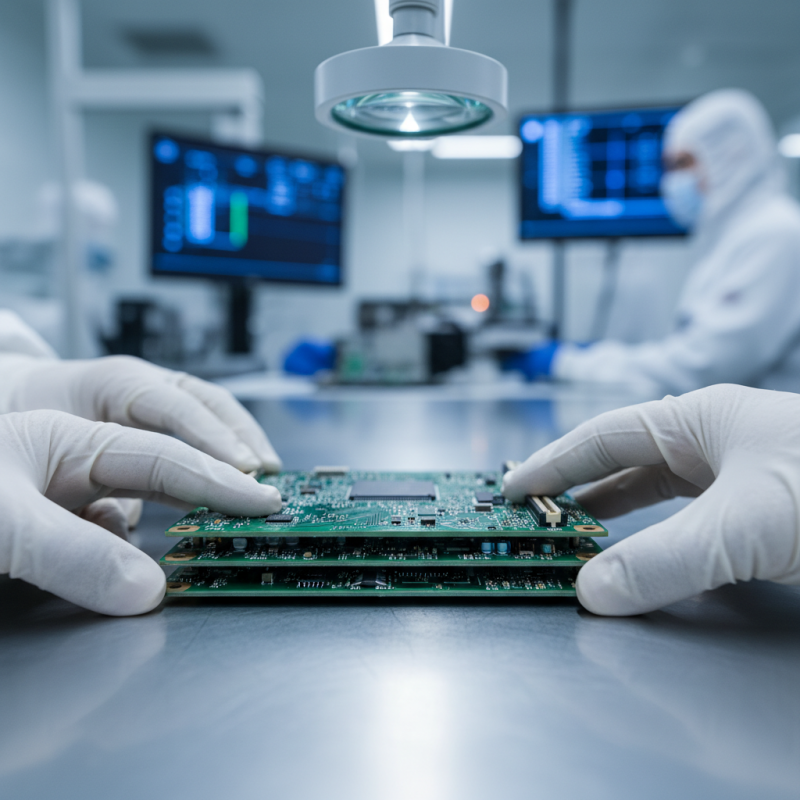
Quality control is a critical aspect of PCB fabrication. It ensures that the printed circuit boards meet specified standards. According to a report by IPC, approximately 30% of PCBs fail product testing. This underscores the need for rigorous testing methods. Common practices include visual inspection, electrical testing, and thermal cycling tests. Each method serves a unique purpose in identifying potential defects.
Visual inspection is often the first line of defense. Technicians examine boards for visible defects like solder misalignment or trace damage. Studies show that 70% of detected issues arise from visual flaws. Electrical testing follows, which checks for shorts and opens in the circuitry. Research indicates that nearly 20% of PCB failures stem from electrical malfunctions. Thermal cycling tests evaluate the PCB's durability under extreme temperature changes, simulating real-world conditions.
Despite best efforts, imperfections still occur. Human errors during assembly or testing can undermine quality. A recent survey highlighted that 15% of PCB manufacturers reported quality control difficulties. Continuous improvement in QC measures is essential. Automation in inspection processes can reduce human error and increase efficiency. By focusing on robust testing and quality checks, manufacturers can enhance reliability and reduce failure rates.
Cost Management Strategies in PCB Manufacturing Processes
Cost management is crucial in PCB manufacturing. The fabrication process can be expensive, often representing up to 60% of the overall project costs. One key area to focus on is materials. Using high-quality materials can save costs in the long run. However, this also requires careful selection and negotiation with suppliers.
Labor costs also play a significant role in PCB fabrication. According to industry reports, optimizing workforce training can reduce errors. This, in turn, minimizes waste and rework. Automation can help, but it requires upfront investment. The balance between automated processes and human oversight is delicate.
Another aspect to consider is production volume. Research from PCB market analysts shows that economies of scale can drastically lower per-unit costs. However, over-committing on inventory can lead to excess costs. Manufacturers need to analyze market demand to avoid overproduction. Effective cost management in PCB fabrication requires constant evaluation and adjustment.