Why is PCB Board Design Crucial for Modern Electronics?
In the rapidly evolving world of electronics, PCB board design plays a pivotal role. Its importance cannot be overstated, as it directly influences device performance and reliability. A well-designed PCB can enhance signal integrity, reduce power consumption, and minimize electromagnetic interference. Conversely, poor design choices may lead to device failures.
The intricacies of PCB board design require not only technical expertise but also a solid understanding of manufacturing processes. Designers must consider factors such as component placement and trace routing. Each decision impacts the final product. Balancing cost and performance is often a challenging task. It demands both creativity and practical experience.
While advancements in software tools have streamlined the design process, complexities remain. Designers grapple with maintaining compact layouts without sacrificing functionality. Moreover, the rise of IoT devices has introduced new challenges in terms of scalability and connectivity. Thus, continual learning and adaptation are essential for PCB designers. The evolution of technology necessitates an ongoing commitment to refine skills and knowledge in this vital area.
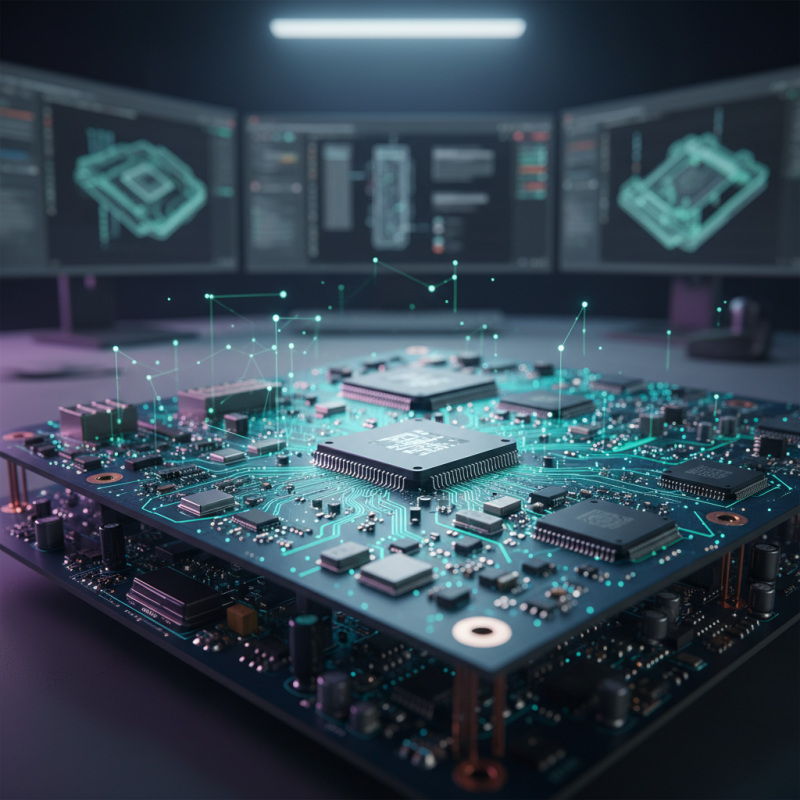
The Role of PCB Boards in Modern Electronic Devices
PCB boards play a vital role in modern electronic devices. These boards form the backbone of nearly every electronic component, from smartphones to home appliances. A recent report by the IPC (Institute for Printed Circuits) indicates that the PCB market is projected to reach $73.97 billion by 2025. This growth is driven by the increasing demand for advanced electronics.
Designing PCB boards is an intricate process. Engineers must consider factors such as layout, signal integrity, and thermal management. A well-designed PCB minimizes electromagnetic interference and enhances the overall performance of the device. The complexity involved can lead to design flaws. In fact, studies show that the cost of fixing a PCB defect can be up to 20 times higher than preventing it during design.
The reliability of modern electronics relies heavily on precise PCB design. Inadequate thermal management can result in devices failing prematurely. A survey by the IEEE revealed that improper PCB design was a significant factor in 35% of electronic product failures. As devices continue to evolve, the importance of PCB design cannot be overstated. The future of technology hinges on the ability to create efficient, reliable, and innovative PCB solutions.
Why is PCB Board Design Crucial for Modern Electronics? - The Role of PCB Boards in Modern Electronic Devices
| Dimension |
Description |
Importance |
| Layer Count |
The number of conductive layers in the PCB. |
Higher layer counts allow for complex circuit designs, enabling more functionality. |
| Material Type |
Types of materials used (e.g., FR-4, Rogers). |
Material choice impacts performance, heat resistance, and signal integrity. |
| Trace Width |
Width of the conductive paths on the PCB. |
Trace width affects current-carrying capacity and can lead to overheating if inadequately sized. |
| Via Types |
Different kinds of vias (e.g., through-hole, blind, buried). |
Vias are vital for connecting different layers and affect the board's complexity and density. |
| Impedance Control |
Management of the electrical impedance in the PCB. |
Controlled impedance is essential for high-frequency signals to reduce signal loss and interference. |
| Thermal Management |
How heat is dissipated from the components on the PCB. |
Effective thermal management prevents overheating and extends component lifespan. |
Key Components and Functions of PCB Board Design
The design of PCB boards is essential for modern electronic devices. A PCB, or printed circuit board, acts as a backbone for components like resistors, capacitors, and microcontrollers. According to industry reports, the global PCB market is expected to reach $75 billion by 2026, driven by increasing demand for smart devices. Each PCB must effectively manage signal integrity, power distribution, and thermal performance.
Key components of PCB board design include layout, materials, and technology. Layout refers to the arrangement of electronic circuits to minimize noise and interference. A well-organized layout enhances performance. Material choice, like FR-4 or Rogers, greatly influences durability and efficiency. Not all materials are suited for high-frequency applications, which could lead to signal loss or overheating.
Moreover, the fabrication process plays a crucial role. Advanced techniques such as multi-layer PCB construction can support more complex circuits but can lead to increased costs. The challenge lies in balancing performance with budget constraints. Engineers often face the dilemma of choosing between high-quality components and cost-effective options, which can impact long-term reliability.
Impact of PCB Design on Performance and Reliability
The design of PCB boards plays a vital role in the performance and reliability of modern electronics. A well-executed PCB design can reduce electromagnetic interference (EMI) by up to 80%, significantly enhancing signal integrity. Reports indicate that 70% of electronics failures are traced back to issues related to PCB design. This statistic emphasizes the importance of meticulous layout and effective component placement.
Choosing the right materials and finishes is equally crucial. For instance, high-frequency applications often require specific materials to minimize signal loss. Studies show that improper material selection can lead to a decrease in efficiency by 40%. Additionally, thermal management is a critical factor. Poor thermal design can lead to overheating, which might compromise the lifespan of electronic devices. Interestingly, only 30% of engineers prioritize thermal considerations in their PCB design process, which is alarming.
Reflecting on these findings, it's clear that many designs lack the necessary rigor. Attention to detail in design will not only improve performance but also enhance reliability. With approximately 25% of PCB prototypes failing during initial testing due to design oversights, it’s crucial for engineers to adopt a proactive approach. The right tools and knowledge can make a difference in achieving optimal designs and reducing future redesigns.
Challenges in PCB Design for Advanced Electronics
Designing printed circuit boards (PCBs) is a complex task. Advanced electronics demand precise layouts. High-speed signals, dense components, and thermal management are just a few challenges. Designers face issues with signal integrity as frequencies increase. The smallest layout errors can lead to signal degradation.
Thermal issues can also arise due to compact designs. Components generate heat that must be dissipated efficiently. Insufficient cooling can cause failures. Another challenge is the placement of components within a limited space. Designers must balance functionality with manufacturability. Cluttered designs can complicate assembly and repair.
Interference between components is another concern. It can affect overall performance. Designers need to implement shielding or careful spacing strategies. These obstacles require innovative solutions and constant refinement. Maintaining accuracy is critical but sometimes difficult in practice. Each mistake can lead to costly redesigns. The journey to achieving an effective PCB design is filled with hurdles.
Challenges in PCB Design for Advanced Electronics
Future Trends in PCB Technology and Design Practices
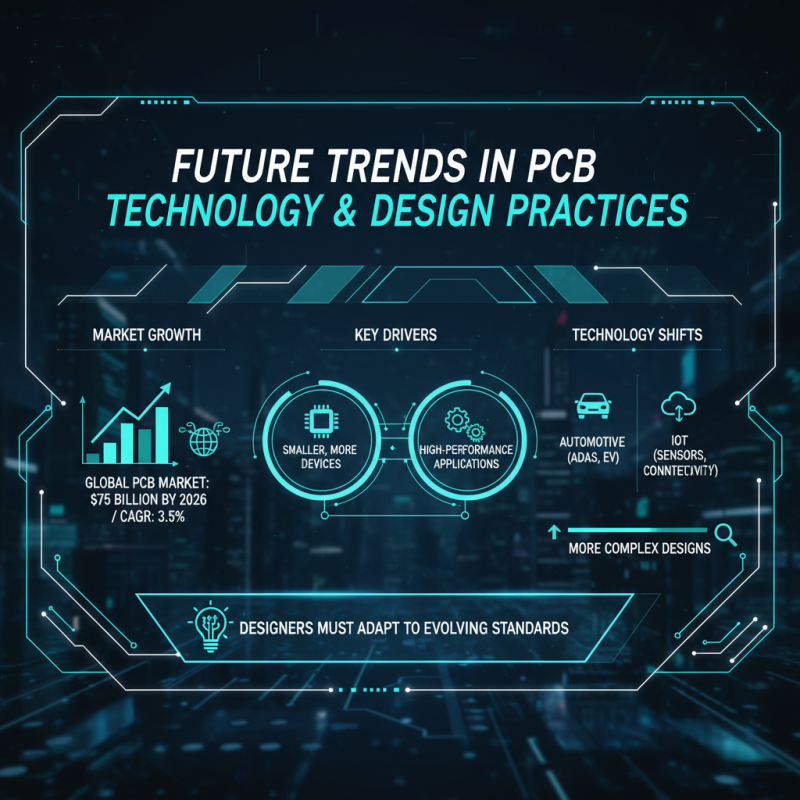
The landscape of PCB technology is evolving rapidly, driven by the demand for smaller, more efficient electronic devices. According to a recent market report, the global PCB market is projected to reach $75 billion by 2026, growing at a CAGR of 3.5%. This growth reflects a shift towards more complex designs that cater to high-performance applications, especially in sectors like automotive and IoT. Designers must stay abreast of these trends to ensure their products meet industry standards and performance expectations.
One key trend is the integration of advanced materials in PCB fabrication. Flex and rigid-flex circuits are gaining traction due to their adaptability and compactness. These materials allow for intricate designs that can be used in limited spaces without compromising performance. However, transitioning to these new materials can pose challenges, as many designers may need to rethink their traditional approaches. Additionally, the use of AI and machine learning in the design process is becoming more prevalent. These technologies can enhance efficiency but require a level of expertise that not all designers currently possess.
Moreover, sustainability is a growing concern in PCB design. As manufacturers seek environmentally friendly options, there is an increased emphasis on recyclable materials and waste reduction practices. However, this shift may lead to mixed results; while it addresses environmental issues, the initial costs and learning curves can be significant. Designers must evaluate these trade-offs carefully, balancing innovation with practicality to navigate the evolving landscape of PCB technology.